Saturday, January 1, 2022

A Memory of Light Thoughts

 Happy New Year!


So it’s New Year’s Day, but also important is that tomorrow is my parents’ anniversary.


Also! I saw The King’s Man and I can’t help but think that the basic plot is how the story of an Assassin’s Creed story might go: a shadowy cabal of villains starting a historical war to meet their own goals, and the heroes go around covertly trying to kill them and foiling their plans.


Anyway let’s talk a bit about Wheelie of Time. I didn’t actually prepare for this Note as much as I should have, given I did have time, but it was a rough week so I’m just going to gush over how much I liked the last book.


Wheel of Time and Concluding a Long Series


I don’t have much point or plan in this other than to talk about how much I enjoyed A Memory of Light, the final book in the long-running Wheel of Time book series. And for the record, I have been critical of some of the previous installments but I powered through them because I desperately wanted to know how it all ended. And this week I finally did.


It felt like a pretty satisfying ending to me. Just about every character and plot thread got a resolution. All the ones that I kept track of, anyway. I’ll admit that I could not follow every single character and plot line, so it’s entirely possible that there’s a contingent of fans out there who hate the ending because their favorite character, some random Aes Sedai who wanders in front of Rand on her way across the street to buy cookies or something, doesn’t get an ending that fits her character. Considering the loads and loads of characters, that as many got as good endings as they did seems an achievement to me.


There is also a lot of pressure to deliver something big. We’re told again and again that this will be the Last Battle, Tarmon Gai’don, in which the Dragon Reborn and his forces will fight the armies of the Dark One, and all of the Forsaken have been trying to one-up each other to get the top spot on the roster for this fight. Admittedly, I haven’t finished any other book serieses with this many books of build-up (although whenever Dresden Files finishes it will get there) but I’ve noticed that there’s a tendency nowadays to try to make it so that the final battles of fantasy sagas are… minimized?


I think it’s in part because many authors feel like they can’t do big battles justice, but it’s disappointing. Many times the battle happens just off-page, or there’s something that comes along and just diffuses the situation before it really gets too bad. Again, I think back to the Soldier Son trilogy by Robin Hobb in which the colonialism conflict is solved because… the colonizers find some gold, so instead of invading indigenous territory they go back to their own (which they stole from other indigenous people) for a gold rush to last an unspecified amount of time. And while sometimes there’s a point being made by the non-battle going on, it still feels a bummer to anyone who wanted to see something big. Like I get the ending of American Gods but I would have liked to have seen more of the Old and New Gods facing off.


Sanderson and Jordan do not have that problem here. Basically all of the last book is a battle, and there’s enough back-and-forth, and awesome moments that stick with you. When characters die, it feels like it means something, not like they’re getting killed off for shock value or because the author hates a character. It kind of reminds me of The Last Olympian that way, actually. And when a character narrowly avoids death, again, it feels like something that’s happening because it makes sense in the story, not because the author decided to spare a fan favorite character.


There’s a really long chapter titled “The Last Battle” which takes up a large chunk of the book, dedicated to many of the key movements during the battle. And one would think that it feels really long, except it doesn’t? I kept forgetting that the chapter wasn’t changing. I just thought that it felt organic that it kept going on like this because it felt like I was in the moment.


And EVERY time someone goes to fight Demandred, I took a deep breath because it felt like a very important boss fight and I knew it would be a difficult thing to get right, and I wasn’t sure who was going to manage it.


I didn’t know what was going to happen in this battle–I had a feeling the good guys would come out on top, but I didn’t know how many would live, and I didn’t know what the consequences of the victory would be. I think that may be key to a very good conclusion: making it so that you don’t necessarily telegraph everything that’s going to happen, but still make it so that the endings don’t come out of nowhere. That the characters’ arcs feel organic and they make sense and end in a way that’s not there to shock readers.


I only wish it didn’t take 14 books to get here.


There were some things at the end that I think could have been resolved more clearly, and I wondered if Robert Jordan had been around to write them that they would have gotten more detailed conclusions. And I don’t know. Some of it is purposefully ambiguous, I think. But I also think that had he been around the series might have stretched another five books or so, at least, and with more and more multiplying characters and subplots that would have made it very difficult to wrap up. It took three books to conclude what he had already–Jordan intended the twelfth book to be the last. I can’t imagine how much longer it’d be if he kept going.


I am very happy with what we got. I wish we had gotten there sooner, and that the previous few books had the same level of urgency, action, and plot development as the last three–especially A Memory of Light which was pretty darn awesome.


Saturday, December 18, 2021

Let's Talk about Cardinal Richelieu

 Assassin’s Creed: Valhalla is working just fine after the last update, and that’s pretty darn cool! Especially because it has the Yule Festival and now a crossover with Assassin’s Creed: Odyssey. I’m pretty excited for that.


Also I’m hoping that I will FINALLY finish putting up Puerto Rico pictures this weekend.


AND season two of The Witcher is now on Netflix wahoo!


Anyhow I saw the 1993 Three Musketeers from Disney and I had thoughts, mostly about Richelieu. My movie review is here but let’s talk about one of the greatest literary antagonists of all time.


Let’s Talk About Cardinal Richelieu


My biggest issue with the 1993 Three Musketeers is that it does Cardinal Richelieu all wrong. Which is a shame. Mind you, their Cardinal Richelieu is still a blast to watch because he’s Tim Curry, and he’s having a ball chewing all the scenery and out-hamming every other performer on the set.


But the entire Plot of the movie is about stopping Richelieu’s plan to take the throne of France for himself, and… no. Just no. This isn’t Cardinal Richelieu’s thing! The entire movie is him walking around cackling and talking about how he’s so excited he’s going to be a tyrant and that’s not who Cardinal Richelieu was, in fiction or in reality. So… let’s back it up and explain Cardinal Richelieu.


Alright in the days of King Louis XIII of France, Cardinal Richelieu was appointed Chief Minister. Think, like Prime Minister. And despite the fact that a clergyman should definitely not be in charge of these things, Richelieu was actually really good at his job? Kings of France did not, at this point in history, have as much power as you’d think from the king of a major country, and Richelieu made sure that the royal court (or, himself, really) had a butt-ton of power to make sure the country ran smoothly. He also kept France going in wars against other countries, making the interesting choice to have alliances with Protestant nations despite being a cardinal and wars of religion being A Thing at this point (still had the Huguenots in France persecuted though). He had a reputation for being a conniving mastermind, which is probably based in truth considering that it’s him who brought the Rossignols into court, who went on to make an unbreakable cipher.


Richelieu was immortalized in literature as the villain of Alexandre Dumas’s The Three Musketeers. Except while he is the villain, he’s not… okay, he is that bad of a guy, but he’s not a cackling supervillain. He’s utterly ruthless and unsympathetic, but he also keeps the country running smoothly, and his plot is to have it publicized that the queen is having an affair with the Duke of Buckingham–which she IS, by the way (in the book). The Musketeers stop him because they think this will end in disaster. And when they foil his plot in the end, he actually offers them a promotion because he’s impressed with their work, and he knows that talent like that shouldn’t go to waste.


Richelieu cares about what happens to France. That doesn’t mean he can’t be petty or have other motivations–I believe in the novel it’s suggested that he once made advances on the queen, and she rebuffed him, and so he’s held a grudge against her ever since. Fine, whatever–but first and foremost is that he keeps the ship sailing smoothly. Everything else comes second to that, or at least he can spin it that way.


His plan in the 1993 movie is to take the throne. Why? Ignoring the historical impossibility of how that would even work (because who watches movies to think about history anyway?*), why would he want that? Richelieu’s entire schtick is being the power behind the throne. The movie justifies it as that the king’s becoming more independent and Richelieu doesn’t want that, but he’s also running the country pretty terribly as it is–it’s mentioned more than once that a lot of people are starving in the countryside, and already know it’s Richelieu’s fault.


Not only would a version of Richelieu faithful to the original story not want the throne, he’d never get the country to the point where average people are starving–and if he did, they certainly wouldn’t think to blame him.


I don’t like that the second season of the BBC Musketeers killed off Richelieu, but the actor they picked went off to be the Doctor so I get it. But I really, really like the first episode of the second season, in which they heroes all suddenly realize that even if Cardinal Richelieu was a scheming bastard, he kept the country pretty safe, running well, and the king from making too stupid decisions, and with him gone everything could quite easily go off the rails (which it does when Rochefort comes back).


In short, people seem to think that Cardinal Richelieu is Jafar or Mordred, a figure trying to take power for himself by whatever means necessary. No. He’s more like David Xanatos or Grand Admiral Thrawn. It’s not just hard to beat him, it’s hard to imagine what beating him would even look like, because he can easily turn any defeat into a victory by staying far enough from the action and taking notes on how to beat the heroes next time.


There’s a character in Invisible Library based off of his archetype, simply known as the Cardinal, and in his debut novel the heroes don’t have to defeat him–they can’t, he’s way above their pay grade anyway. It’s about convincing him why killing them would be against his best interests.


Cardinal Richelieu is this really complex and interesting villain. I would say I’m frustrated that not a lot of writers get that, but it seems that plenty do, actually. So it’s more frustrating when I see that someone doesn’t get it. I understand that the 1993 movie was probably trying to make the Plot a lot more accessible by simplifying the Plot to make it easier to understand to average moviegoers, and I can’t fault it too much for that. And again, Tim Curry is a lot of fun to watch. But the cackling Richelieu plotting for the throne? That feels so against the idea of who Richelieu is supposed to be that it seems like they could have, and should have, written an entirely different character there.


*Okay, sometimes I do that. But I try not to get bogged down by it.

Saturday, December 11, 2021

Protagonist Power Levels

 Yesterday finished A History of What Comes Next! And supposedly there’s going to be a big announcement for Assassin’s Creed: Valhalla on Monday! Let’s see if I can get the game working by then.


The idea of doing a Note on Spider-Man and why the MCU version struggles to gain cookie points with me was considered, but a quick look through my Google Drive showed me I had already written a Note to that effect back in August 2019. I may revisit that topic, but I think it might be best to first watch No Way Home. Though it may devolve into gushing how amazing Into the Spider-Verse is.


Also I started jotting ideas for another Note but then saw I did that one too. Maybe I’ve written about this too and forgot, but who cares? We’re doing this.


Protagonist Power Levels


So I’ve been working on my Iron Druid sporkings again and once again, I’m struck by something very frustrating with Atticus as a character: he’s way too powerful to start with. Even if we ignore that in the second chapter of his debut book he’s made practically immune to death (I’m not kidding) he’s still absurdly powerful from the get-go. And he’s more intelligent by miles–the villains are really bad at coming up with plans to kill him. The final battle with his longtime enemy, Aenghus Og, has him reveal that he’s so much more skilled at swordplay and so Atticus quite easily dispatches his foe.


It’s pretty stupid.


Really good hero/villain confrontations require the writers to work out a delicate balance of power. If the antagonist is not a challenge to the protagonist’s on physical terms, he must be in some other way. I’m not saying that the protagonist has to be a wimp compared to the antagonist–though it’s more relatable to the average reader I think–but being more powerful right off the bat? Probably not the right track. Hounded tries to hide this by having a lot of stupid subplots that kill the time until the finale.


Part of the difficulty of writing Superman, for instance, is writing a story in which he fights someone because, well, he’s Superman. When he fights someone, it tends to be someone who is in his weight class, power-wise, like General Zod, Doomsday, or Mongul. Or someone with kryptonite. And then there’s Lex Luthor, who isn’t as strong as Superman, but is wickedly intelligent and uses that brain of his to start evil plots that Superman has to stop. Also he carries a butt-ton of kryptonite (which actually gave him cancer in the DCAU).


In the conflicts in which his strength isn’t enough (which is more often than people think), Superman has to think of some other way to defeat the villain.


Or in the case of long-running serieses, it’s good to see how the protagonists grow over time. In something like the webseries RWBY. When we start the series, the main cast members are all incredibly skilled fighters by normal people standards, and the usual monsters they mow down with ease. But they’re still teenagers, and as the show goes on and they come across bigger monsters and other humans who are much more experienced, they’re very clearly outclassed. It’s not until about Volume 8 or so that our heroes even come close to fighting Neo on something like even footing–and even then, it’s a team effort. The only ones who clearly manage to completely trounce her are someone with godlike magical power, and someone who has decades of experience on her.


I think a good balance is Dresden Files? Harry Dresden is a very powerful wizard, and can take out mooks easily enough, but he’s still mortal, and many of the villains he faces aren’t, and are several levels above him. Most of the big villains are nowhere near characters he can beat on his own–and if they are, they’re smart enough to not face him alone. Again, it’s not about being able to out-magic his enemies, being more powerful than them. It’s about out-thinking them on many occasions, and he has to think of ways out of the conflict that don’t involve a straight-up fight. Sometimes that involves invoking the enemy’s weakness (like with faeries and iron), or it’s about getting someone else to take care of the problem (like summoning Mab or the Wardens to clean up a problem).


The point I’m making is: you absolutely cannot have your protagonist be superior to your antagonist in every way and still make it feel like a satisfying story. Maybe your hero is stronger than your villain! But then you have to work out why that villain still poses a challenge to the hero, in a way that’s not “Because the Plot refuses to let them meet until the end.”


And this doesn’t mean your heroes have to be weak to begin with! But there’s a difference between ‘hero starts out strong,’ and ‘hero starts out, and continues to be, able to curbstomp his problems with no difficulty.’ Leveling up the hero as the story goes on is one way to do it. Making your hero have to outsmart or outmaneuver the enemy is another.


Just don’t try working with an invincible hero from the start. It’ll either be really boring or really annoying.


Saturday, December 4, 2021

On Character Descriptions

 Today is my dad’s birthday and the plan is to cook him a jambalaya and cobbler tonight. So I have that to look forward to! I also hope to get a good walk in, some Christmas shopping, and get a bit further with “Tombs of the Fallen” in Assassin’s Creed: Valhalla this weekend, but the game keeps freezing when I get to East Anglia so not sure how that will go!


Also I read a comic that had been on my to-read list for ages on Goodreads, and sadly it wasn’t as much fun as I hoped. Oh well.


And I think at least some Puerto Rico pictures will show up on Facebook this weekend.


---


How to Tackle Character Descriptions in Prose


I’ve been thinking a lot about this and I figured this would just be a thing I talked about verbally, until I sat down Thursday and figured, hey, this would actually be an okay Saturday Note topic. But basically: I’m starting to get kind of fascinated about the ways in which authors of books decide to design and describe characters. 


For example, I think most of the writing guides I’ve seen in the past decade or so try to discourage the notion of you stopping the action to describe what a character looks like, especially the main character. The surprisingly popular way of doing this, which I’ve seen almost universally condemned, is the Mirror Scene, in which the protagonist is getting ready for his or her day and looks into the mirror, and explains to the audience what he or she looks like. And I get that halting everything to give a description, especially if it’s not a good one, can be incredibly annoying, but how else are you going to get this information across?


And there ARE ways, but then you have to work to spread that information out in a way that’s not an infodump, or accept that not all the details you have in your head are going to make it into the text. If you DO put that much detail, you have to make sure it’s applied fairly consistently. I’ve noticed that sometimes authors will put plenty of detail into describing one or two characters but not work on the others. Kevin Hearne in the Iron Druid books (at least the first two) has attractive female characters described in pretty excruciating details in their outfits and the way they look, whereas most of the male characters are given much more basic descriptions--in that case it’s pretty obvious what’s caught the author’s interest.


Something I find really interesting is how a lot of authors manage to describe a character really well without actually giving you a ton of details? They hand out abstract ideas more than concrete information. Moist von Lipwig is, for instance, said to be really average-looking with no obvious distinguishing facial characteristics, and other than maybe his hair color and a couple of basics we’re not given much to go on. Which is part of the point, as Lipwig uses his nondescript appearance to avoid the authorities as a con man and thief.


I first started really noticing this with a blog post from Rick Riordan ages ago, when he mentioned that he doesn’t do detailed character descriptions in his books, citing that he wants readers to make their own images from imaginations, as they’re probably going to do that anyway while reading. And he’s right? Percy Jackson isn’t given that much of an obvious description--we’re told he’s got dark hair and green eyes, and maybe he looks mischievous. The sequel series tells us he’s apparently attractive for a guy his age, and that he looks a bit like a skater kid. And it’s said in a roundabout way that he’s white. I think my favorite description though is Annabeth--Percy tells the audience she’s pretty, with blonde curls first when he’s flitting in and out of consciousness, but then when he’s fully awake that she would look like a stereotypical California girl, except that her gray eyes ruined the image.


And right there, you probably have in your head a very solid image of what she looks like, to you, but the author managed to get that picture in your head. It works really well when he’s describing the gods as well, because with the Greek mythology theme he’s depicting them as archetypes that are adapted to American culture. Telling you that Ares is a mean-looking biker, or that Poseidon is tanned and wearing Hawaiian shirts, or Zeus is in a pinstriped suit--this all gives you a better picture, one that feels better for you, than if he did paragraphs upon paragraphs giving you exact body proportions and facial features.


Also going on character descriptions: I don’t remember exactly covering this one point in a creative writing class, but there’s a tendency to try to make sure that characters fit our expectations in that they way they look “fits” with their personality traits. And that’s not bad in and of itself, and there are ways in which it really works. But I also really like when character descriptions subvert your expectations?


Right now I’m slowly working my way through the Witcher books, for instance, and there’s a character, Sigismund Dijkstra, who we are told is fat and bald and large, and dresses flamboyantly, giving the impression of a well-dressed pig. And you know what his job is? He’s head of Redanian intelligence--and he’s darn good at his job. It’s a bit wasted because from the beginning of his appearances the viewpoint characters all know exactly who he is, so it’s not as if the discrepancy ever actually becomes relevant.


I would like more authors to really play around with character descriptions like this? To have a character look a certain way that automatically brings to mind a certain personality or archetype and then have the person act in a completely different way than one would expect from the way the person looks. This isn’t that rare in fiction at all (though usually it’s reserved for villains who look like heroes), but I would like it to be more varied in different character types other than ‘Here’s a bad guy who looks like a good guy,’ or vice-versa.


---

Saturday, November 20, 2021

Different Types of Fantasy Government

 I have sent more letters in the past month than I would have expected. I need to get more stamps though…


It is likely that I will not have a Saturday Note next week--I’ll be a bit busy.


The idea of doing another ‘fantasy based on this historical setting would look like this’ Notes, with Italian Renaissance and colonial Caribbean being the ones that were at the top of my list. I thought I should read Stravaganza before that Renaissance one though.


The last Expanse book comes out soon! 


---


Fantasy Forms of Government That Would Be Cool


I was thinking of Saturday Note ideas, and I think maybe I’ve done something like this before, but I’m low on topic ideas and I’m having a stressful week. So this!


You’ll notice that in fantasy, there’s a tendency to do one kind of government: that’s monarchy. Usually a very simple idea of monarchy, based less on history and more on fairy tales of what monarchy was like. And that’s not bad! But even the deconstructions don’t seem to get that there are different ways to do government other than ‘fairy tale monarchy’ and ‘modern day representative government.’ Or dictatorship. I guess that’s a popular trope to use too. 


But not all historical governments were like this! And I think fantasy, by its nature being fantasy, could do a lot better than that. They could show a lot more variety here.


Two (or More!) Kings


You know ancient Sparta had two kings? That always confuses me. They also didn’t have absolute power, as they had to run things by the ephors and other bodies of citizens rather than getting to do whatever they wanted regarding any subject.


Actually Narnia in its Golden Age had four monarchs. I guess we keep forgetting that.


And I’m curious to see if a fantasy author can do something interesting with more than one king in a country. Do they split up the country geographically? Do they have a rivalry (probably)? Do they actually get along very well (unlikely but would make an interesting and unique dynamic)? Does one of them do administration and another one does military matters? Is kingship hereditary or is it elected somehow from a pool of candidates?


Representative Government


Alright this covers a very large number of government types, but I rarely see parliaments or something like the Estates General in fantasy fiction. Sometimes I see a senate, I guess. But that’s something we can do a lot with? People seem to think that if you take away the aristocratic titles that it eliminates the drama of people in power or a ruling class, but, uh--[waves at government in the US]


And there’s this notion that a republic or a democracy is inherently less likely to be incorrupt, or less corrupt, than a monarchy or dictatorship, and so there’s less to be milked out there for drama. Which plainly isn’t true? Part of the reason that the Roman Empire rose up was because the Republic was hopefully inept at cleaning up its own messes due to corruption and civil wars every decade or so.


Have characters be in the representative body! Have them deal with the problems of trying to get a law passed through it! Or the hoops you have to jump through to make something as straightforward as war happen! Or show how fragile that type of government can be.


Wizard King/Queen


Alright obviously plenty of villains are sorcerer kings but what if they weren’t the villains? I’m not saying they’re going to be all good--I think having that much power will not be a great thing for anyone’s emotional stability. But something I think about sometimes is how Saruman in Lord of the Rings is trying to set himself up as a wizard king, and what would that even look like?


Would a wizard king have a court of a bunch of other wizard aristocrats? Would a wizard king value knowledge of magic over noble bloodlines? Or does he outlaw other magicians to make sure he’s the one guy in power? How much magic does he use in his everyday life?


Loose Confederation of Differently-Run States Under One King


The Earth Kingdom in Avatar: The Last Airbender actually has this, which apparently confuses some people because again, their understanding of monarchies is based entirely off of half-remembered fairy tales. It’s a Plot Point in the fourth season of Legend of Korra that Kuvira is reforming them all into a single state under one dictator rather than the loose confederation with their own way of doing things, isn’t it? We didn’t forget this?


And I like this idea of a country in a fantasy world that has several different “states” or provinces or whatever that are all under the same government, but have vastly different cultures and styles of doing things? So one of them has a king, another has a senate, or another has a council, and one is a theocracy or whatever. And trying to get them to all agree on something can take forever.


---

Saturday, November 13, 2021

King Raven & the English Monarchy

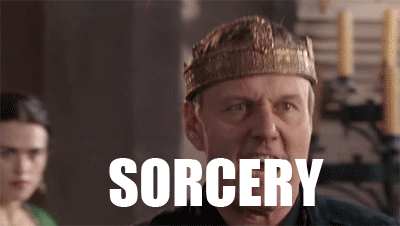
 What’s this? I actually came up with the Saturday Note topic on Monday??? SORCERY!


The last two days of the week have been DOOZIES, and I’m hoping going to YALLFest this weekend will be the healing balm that will make it all okay. The rest of this month is going to kick into high gear, and I can’t promise more Saturday Notes. I don’t know what’s going to happen! Probably one more though. We’ll see.


Oh fudge this is going to kill my word count for the month, isn’t it? And my Christamas shopping….


I finished King Raven though! I personally think it’s Stephen Lawhead at his best.


---


King Raven & Royal Power


So Stephen Lawhead, an American Christian author who moved to the UK and became obsessed with Celtic Christianity and pre-Christian mythology/folklore. And he wrote a series about Robin Hood, in which he made him Welsh and set it in the reign of William II because Reasons. (Okay, he does explain it and I think it makes sense but I’m someone who is not a historian or expert or scholar of any sort so I couldn’t say whether or not it’s actually convincing.)


And something I’ve been thinking about ever since finishing the second book, Scarlett, is that Lawhead has a different view of the King of England than a lot of mainstream takes on Robin Hood. To be clear, it’s also a different king--William Rufus rather than Richard the Lionheart. But still, I think there’s something interesting here. Most Robin Hood stories are about restoring the rightful king, and once Richard gets back, or back when he was king (in stories in which his restoration is impossible) everything was much better. An odd take for a story featuring an outlaw, but there you go.


Part of this is because King Richard I has a very popular image in the English-speaking world to this day. Yeah, there are some people who look at him more critically, but overall, opinion of him is pretty good. Outside of the English-speaking world, I don’t quite know for sure--the Arn the Knight Templar trilogy has a whole schtick where the main character declares that the world will know him as an oathbreaker and murderer after the massacre in Acre, but I don’t know if that’s actually how he’s viewed in that book series’s home country.


King Raven does not have a great view of kings in general. Which is not quite what I think most people would expect if I was talking about a historical fiction trilogy with explicit Christian leanings. I don’t think it’s too out there--after all, the Bible is not very kind to kings in general, something a lot of hardcore traditional Catholics seem to forget. When Israel is demanding to get a king like all the other countries, God explicitly tells Samuel to remind them that kings will take all their best stuff and could very well turn out to be a tyrant, as many of them turn out to be.


Lawhead’s books don’t demonize William Rufus, but they also don’t make him out to be that great of a guy? The ending of the last novel has them making their peace with him (after spending like a week filling his knights with arrows), and Bran swears fealty to him, but it’s not because they realize he’s the divinely-appointed ruler of Britain. It’s because that’s the best way they decide to end bloodshed, and William’s got other things he needs to do. Basically, he’s tired of it, and Bran wants an end to the war.


The previous book has another instance in which they help William II by revealing to him the conspiracy against him among his own aristocrats, and use it to try to get the throne of Elfael back. And the characters actually seriously consider siding with William’s enemies. Ultimately they side with William not because they owe loyalty to the throne or English/Norman monarchy, but because they think he’s more likely to be in their corner because of their bargaining chip of information. It’s not out of love, it’s just because William is more likely to get them what they need.


Obviously this is heavily influenced by the characters all being Welsh. Yeah, of COURSE they’re not going to preach about the virtues of the King of England, because the only reason there is a King of England is because of people repeatedly coming in and conquering them. Their attitude is of a people suffering under the colonialism of the Norman warrior aristocracy, after suffering under the colonialism of the Saxon warrior aristocracy. It’s not their king, it’s the king of their oppressors. Their relationship needs a lot more work if it’s going to get anything close to love or patriotism.


Although to be fair other kings aren’t necessarily portrayed that well either. Bran’s father isn’t an evil man, but he’s explicitly distant and he tends to try to use force or stubbornness against any annoyance that pops up around him, which Angharad points out to Bran. King Gruffud (who was a real guy, I just found out???) isn’t evil either, but upon being freed by Bran to get help for Elfael, turns around and says he can’t do that because it’s too much work, even AFTER promising to do anything Bran needs for him. He shows up at the end, basically after he’s convinced that they can win by other folks. And Merian’s father is a good king to his people, mostly, but he bends very easily to the Normans, and he’s happy to send his daughter off to live with a baron who is definitely creepily into her against said daughter’s objections.


Lawhead doesn’t hate kings, obviously--look at his other books and I think that becomes clear. But I find it amusing that a openly Christian author has a much more cynical view of kingship and medieval politics than you’d expect, definitely more so than most mainstream Robin Hood depictions. And I think it’s a more realistic take? And one that, in today’s conversations about colonialism, feels better (though by no means perfect) because it highlights the injustice of the system all the while recognizing the need to work within it.


Or something?


I don’t know, I’m tired. I haven’t been sleeping well.


Maybe the point is that you’re supposed to go into the woods, dress like a bird, and jump on people until you get your house back.


---

Saturday, November 6, 2021

On Mythological Accuracy

 Hallo! I have had a weird week. When I’m typing this I still haven’t put up all of the pictures from last weekend, but those shall hopefully go up shortly. I have not updated the Book Diary in a few days because I’m currently reading the second-to-last Wheel of Time, which is great fun! I’m also currently watching both Maya and the Three on Netflix and Gravity Falls on Disney+ and those are fun! The former of which is part of what made me think about this Saturday Note idea.


I might see Dune this weekend? That might be cool. I don’t know when I’d see Eternals, but while I like the premise, see my recent Note on Black Widow to see the thought process I’m having regarding that movie.


Maybe I've talked about this before but too bad!


---


On Mythological Accuracy in Fiction


I sometimes think about this article written by one of my colleagues on ImpishIdea, back when I had colleagues on ImpishIdea. The thrust of it is that urban fantasy authors often mix up mythologies, get the originals wrong, all in trying to make it fit within patterns of mythology and fantasy creatures established by pop culture, which is itself mostly drawn from European folklore in general and English folklore in specific.


Or in short, calling fantastical creatures that aren’t from European folklore ‘fairies’ is bad because that’s not what other people would have called them.


And at the time I remember thinking it was a good article, and I think it does bring up good points. But I also think that it misses that A) in fiction, you should be able to do what you want with your underlying mythology, and B) the kind of people who just sit and call fiction inaccurate to real life are really annoying to hang out with. There’s not nothing to this school of criticism, especially when an author is claiming to stick to real life or act as if he or she is doing a ton of research when clearly this person has not--Dan Brown comes to mind. And when the author is claiming to try to represent to your different mythologies in a way clearly meant to reflect some level of accuracy, when it doesn’t--like in Angelopolis or in Tiger’s Curse--then yeah, go ahead and make these criticisms.


But this seems to be mostly “You need to be 100% accurate to the original mythologies if you’re going to use them!” and that’s… not that great a take. Because calling non-European extra-human creatures from folklore ‘fairies’ is actually not a bad thing--it gives a point of reference to readers. The idea of “other folk”, or a human-like species that lives alongside humanity out in the wilderness somewhere, and has magic or a connection to nature that we don’t, is a very common idea throughout human history. And no, they weren’t always called ‘fairies’ but it’s a good enough descriptor and gives audiences an idea of what we’re talking about even if they don’t understand the other cultures involved.


The Onyx Court series by Marie Brennan is about a faerie court nestled under London at different points in history, and one of the books set during the 1700’s has them get a visitor from the Middle East, a djinni. And he is described as a faerie, albeit a foreign one which they don’t understand very well. No, a djinni was not described as a fairy in the stories, because the culture it comes from doesn’t have that word, but it fits a similar role in the mythology and folklore that I don’t think that term is unjustified there.


[There’s actually his whole amusing thing because the English/British fae are all hurt by overt symbols of faith and religion, and they’re absolutely baffled by this djinni who is a devoutly religious Muslim down to his name.]


Likewise, I also remember for Aliette de Bodard’s Obsidian & Blood trilogy, she wrote a series of blog posts describing Nahuatl culture and religion to help make the series more accessible, and when talking about the religion followed by the people of the Aztec Triple Alliance, she describes the different gods. And someone called her out in the comments pointing out that it’s not exactly an accurate way to portray the way the people in question thought of their religion. The author agreed, but pointed out that it’s a difficult thing to accurately convey to people from mostly European-influenced culture, and this is also pointed out in the author’s notes in the books themselves. This historical supernatural murder mystery’s going to be a lot harder to tell and make interesting if we have to introduce a completely foreign way of understanding divinity to the audience.


I’m also currently watching Maya and the Three which is inspired by mostly Mesoamerican culture, and many of the deities depicted are named after beings from Aztec and Mayan mythology. Some of which are used in wildly different ways from the original stories. The main villain is Lord Mictlan, the god of war, and if you know Nahuatl mythology you’ll know that Mictlan is the name of the underworld, not a particular deity. Gutierrez did the same thing with Xibalba in Book of Life.


And I don’t care because this is a series aimed at young people that isn’t meant to teach you about Mesoamerican mythology as much as tell an interesting story with a Mesoamerican basis to it. It doesn’t have to be accurate to the myths.


“But how would you feel if they did that to your culture/religion?!”


My dude. Have you seen a horror movie in the past forty years? Most of them display an understanding of Catholicism that might be gained from scanning Wikipedia articles and half-remembered Catholic school classes. I remember there’s a Tumblr blog (notbecauseofvictories, if you’re curious) that refers to Christianity as used in fiction like Supernatural to be “McNugget Christianity”; that is to say, mashed up and processed to make a treat, but not as fulfilling as the real chicken, or even really all that close when you look at the finished product.


Thai isn’t to say that I don’t appreciate it when fiction using mythology is accurate to the myths. The Lighting Thief still has a very special place in my heart because it is one of the first pieces of fiction about Greek mythology that I remember using Hades as a character and not making him into a stand-in for Satan. Instead he’s as he was in the myths--the lord of the underworld, and not someone you want to cross, but by no means evil, and he’s more than a little stressed about all the pressure he has in running a kingdom. And Riordan’s Greek mythology books, while not always 100% accurate, show an understanding of the myths that you rarely ever see in even adult fiction. Riordan has linked to Theoi on his website quite a lot, so he knows his stuff, and just takes liberties for the fiction, or to make the story more superheroic.


But not everyone has to do this. Especially when we’re talking about mythologies that are not as well-documented as the Greco-Roman one is. Neil Gaiman has admitted he extrapolated a lot for his use of Slavic mythology in American Gods, and today a large chunk of what we see there isn’t believed by scholars, but it makes a good story so we let it slide.


Story! That is important above almost all else! Above mythological accuracy to be sure. Again, if you’re stupid and trying to tell the audience that you’ve totally done your homework when you clearly haven’t, that’s a problem. Even then, that can be maybe excused if the story’s still good. If you’re using mythology, telling the story, and making it comprehensible to the audience, is much more important than whether or not you tell each myth accurately. Obviously be respectful of other cultures, but if you’re not 100% accurate I don’t think it’s that big of a deal.


---